Category Guide
Engine Parts Sourcing Guide
A practical guide for importers and distributors sourcing engine parts from China — quality tiers, supplier evaluation, packaging requirements, and inquiry best practices.
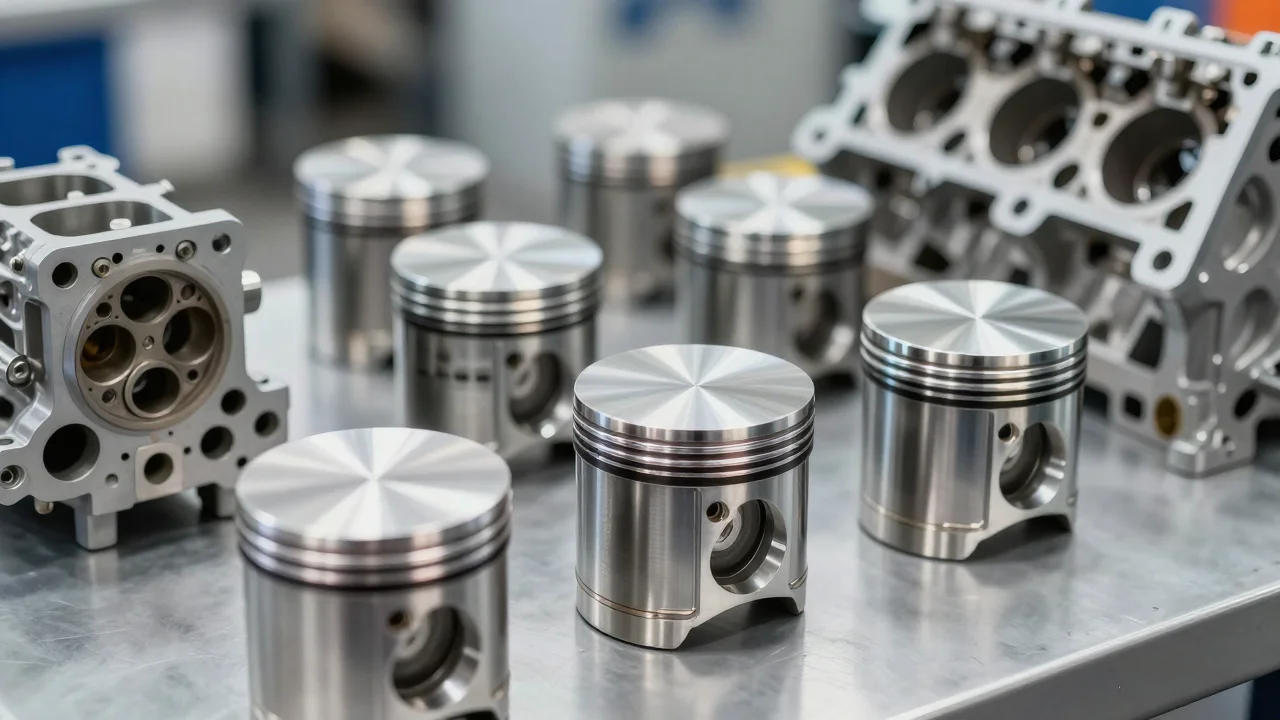
Engine parts sourcing is different from other auto parts categories. Pistons, valves, bearings, and gaskets operate under extreme conditions — heat, pressure, friction — and even small quality deviations can lead to catastrophic engine failure. For importers and distributors, getting engine parts right means understanding quality tiers, evaluating suppliers against stricter criteria, and managing packaging requirements that prevent corrosion and damage during transit.
## Why engine parts sourcing needs a different approach
Unlike exterior or chassis components where cosmetic imperfections might be acceptable, engine parts have zero tolerance for quality variation. An out-of-spec piston ring or a bearing with inconsistent material composition doesn't just fail — it takes the entire engine with it. This means:
- Quality requirements are stricter and more precisely defined
- Supplier evaluation must go deeper than price and sample quality
- Packaging must include anti-corrosion treatment for long-distance shipping
- Application compatibility information must be accurate and complete
## Key engine part categories
When sourcing engine parts from China, buyers typically deal with these major categories:
### Pistons and piston rings
The most precision-sensitive engine components. Pistons require exact dimensional tolerances and specific alloy compositions. Piston rings need precise tension control and surface coating for proper sealing.
### Valves and valve train components
Intake and exhaust valves, valve guides, valve seats, and related components. Material selection (stainless steel grades, stellite coating) directly affects durability and performance.
### Gaskets and seals
Head gaskets, manifold gaskets, oil seals, and O-rings. Multi-layer steel (MLS) head gaskets require precise embossing and coating processes. Material compatibility with engine fluids is critical.
### Bearings
Main bearings, connecting rod bearings, camshaft bearings. Bearing material composition (aluminum-tin, copper-lead, tri-metal) determines load capacity and service life. Consistent wall thickness is non-negotiable.
### Timing components
Timing belts, timing chains, tensioners, idlers, and sprockets. Timing belt material and cord construction affect replacement intervals. Chain pitch accuracy determines noise and wear characteristics.
## Quality tiers explained
Engine parts are typically available in three quality tiers. Understanding the differences helps you match the right tier to your market:
| Tier | Description | Typical Market |
|------|-------------|---------------|
| **OEM/OES** | Manufactured to original equipment specifications, often by the same factories supplying vehicle manufacturers | Premium aftermarket, dealership service channels |
| **Aftermarket-grade** | Built to match OEM performance with comparable materials and tolerances, at a lower price point | Independent workshops, mid-market retail |
| **Economy** | Basic functional replacement with cost-optimized materials and wider tolerances | Price-sensitive markets, older vehicle applications |
The key distinction: aftermarket-grade doesn't mean low quality — it means cost-optimized quality that meets functional requirements without the OE brand markup. The most successful importers match the tier to their target market's expectations, not just to the lowest available price.
## Supplier evaluation criteria for engine parts
Evaluating suppliers for engine parts requires deeper investigation than for general auto parts. Focus on these areas:
- **Production specialization**: Does the supplier specialize in a specific engine part category, or do they produce across many categories? Specialization often correlates with better quality consistency.
- **Quality certifications**: IATF 16949 is the automotive-specific quality management standard. ISO 9001 is the minimum baseline. For suppliers targeting European markets, check for relevant ECE or TUV certifications.
- **Material traceability**: Can the supplier provide material certificates (mill test reports) for the alloys and compounds used? This is important for compliance with your market's regulations.
- **Testing capability**: Does the supplier have in-house testing equipment? For pistons, this means dimensional measurement systems; for bearings, material hardness testers; for gaskets, compression and recovery testers.
- **Reference customers**: Ask for references in your target market. A supplier that successfully serves German or Japanese aftermarket customers has already proven their quality level.
- **Sample evaluation protocol**: Always request production samples (not hand-picked "golden samples") and evaluate them against your specification before committing to an order.
## Packaging and anti-corrosion requirements
Engine parts are vulnerable to corrosion during ocean transit. Proper packaging is not optional:
- Precision surfaces (bearing shells, piston skirts, valve stems) require VCI (volatile corrosion inhibitor) paper or oil coating
- Parts should be individually separated — metal-on-metal contact during transit causes fretting damage
- Export-grade cartons with moisture barriers for sea freight
- Labeling must include part numbers, application data, and manufacturing date for traceability
## Common buyer mistakes and how to avoid them
The most frequent issues we see:
1. **Buying by price alone**: The cheapest piston set usually costs more in warranty claims than it saves in purchase price
2. **Skipping application verification**: "Universal fit" claims that don't specify exact vehicle models and years are a red flag
3. **Inadequate packaging instructions**: Assuming the supplier will use export-grade packaging without explicitly requiring it
4. **No pre-shipment inspection**: Engine parts should be inspected before shipment — the cost of inspection is a fraction of the cost of a single failed shipment
5. **Ordering mixed quality tiers without disclosure**: If you're buying economy-tier parts, be transparent with your customers about what they're getting
## How to structure your inquiry for engine parts
A well-structured inquiry saves time and gets you accurate quotations. Include:
1. **Part numbers and OE references** — the more specific, the better
2. **Target vehicle applications** — makes, models, years, engine codes
3. **Required quality tier** — OEM-equivalent, aftermarket-grade, or economy
4. **Expected annual volume** — helps suppliers determine production planning
5. **Certification requirements** — IATF 16949, ISO 9001, market-specific standards
6. **Packaging requirements** — individual boxing, VCI treatment, export carton specs
7. **Destination market** — regulatory requirements differ significantly between regions
Starting with a clear inquiry structure sets the tone for a professional supplier relationship and filters out suppliers who can't meet your requirements before you waste time on samples.