Sourcing Guide
Auto Parts Certification & Standards Guide
A comprehensive guide to ISO, ECE, SAE, CE, and other auto parts certifications. What importers need to know about quality standards for different markets.
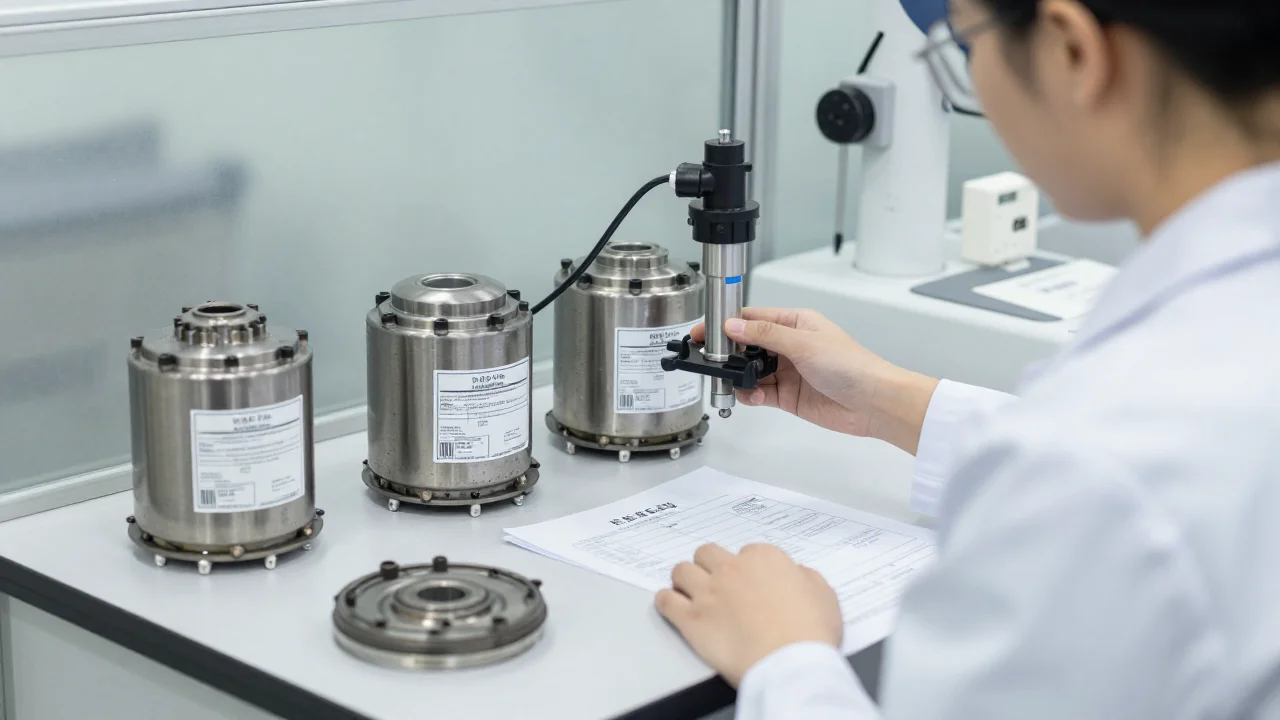
Certifications and standards are the common language of quality in the auto parts industry. For importers, understanding which certifications matter — and which don't — is the difference between smooth customs clearance and a shipment held at the port. This guide covers the major certification frameworks, what they mean, and how to verify that your supplier's certifications are legitimate.
## Why certifications matter in auto parts sourcing
Certifications serve three purposes for importers:
1. **Market access**: Many countries require specific certifications before auto parts can be legally sold. Europe requires ECE R90 for brake pads. GCC countries require GSO certification. Without the right paperwork, your shipment doesn't clear customs.
2. **Quality assurance**: Certifications like IATF 16949 indicate that a supplier operates a systematic quality management process — not just that they happened to make one good sample batch.
3. **Customer trust**: In competitive markets, certification marks on products and packaging give buyers confidence that the parts meet recognized standards.
## ISO 9001 and IATF 16949: Quality management systems
### ISO 9001
The global baseline for quality management systems. An ISO 9001-certified factory has documented processes for design, production, inspection, and corrective action. This is the minimum expected certification for any professional auto parts supplier.
**What it tells you**: The supplier has a structured quality system. It doesn't tell you whether they make good engine parts — it tells you they have processes to detect and correct quality problems.
### IATF 16949
The automotive-specific quality management standard, built on ISO 9001 with additional requirements specific to automotive production. IATF 16949 certification indicates the supplier understands automotive industry requirements for defect prevention, risk management, and continuous improvement.
**What it tells you**: This supplier operates at automotive industry standards, not generic manufacturing standards. For engine parts, brake parts, and safety-critical components, IATF 16949 is strongly preferred.
**Key distinction**: Many Chinese auto parts factories have ISO 9001. Far fewer have IATF 16949. A supplier with IATF 16949 has made a significant investment in quality infrastructure.
## ECE regulations: European market compliance
The UN Economic Commission for Europe (ECE) establishes regulations that are adopted by EU member states and many non-EU countries. Key ECE regulations for auto parts:
### ECE R90 — Brake parts
The most well-known ECE regulation among auto parts importers. ECE R90 covers replacement brake pads, brake shoes, and brake discs. Parts sold in the EU and many other markets must carry ECE R90 approval markings.
**What importers need to know**: ECE R90 approval requires the manufacturer to submit samples for testing at an authorized laboratory. The testing covers braking performance, speed sensitivity, and cold performance equivalence to the original part. Approval is part-number-specific — having R90 on one brake pad doesn't cover the supplier's entire catalog.
### ECE R10 — Electromagnetic compatibility
Relevant for auto parts with electronic components — sensors, ECUs, electric pumps, lighting.
### ECE R13 — Braking systems
Covers complete braking system components beyond friction materials.
## SAE standards: North American markets
The Society of Automotive Engineers (SAE) publishes technical standards widely referenced in North American markets. SAE standards are typically not legal requirements but are industry expectations:
- **SAE J431**: Automotive gray iron castings (relevant for brake discs, drums)
- **SAE J518**: Hydraulic flanged connectors (relevant for hydraulic brake and power steering components)
- **SAE J1455**: Environmental testing for electronic components
**What importers need to know**: SAE standards define technical specifications. A part "meeting SAE J431" means it was manufactured to that specification. This is different from certification — SAE doesn't certify products. Look for independent lab test reports confirming compliance.
## CE marking: European Union
CE marking indicates conformity with EU health, safety, and environmental requirements. For auto parts, CE marking applies to specific categories:
- Electrical and electronic components (EMC Directive)
- Safety components where applicable
- Noise-related components
**Important caveat**: CE marking is a manufacturer's self-declaration for most auto parts categories — not a third-party certification. A CE mark doesn't mean an independent body tested the part. It means the manufacturer declares the part meets applicable EU directives.
## Country-specific certification requirements
Different markets have additional certification requirements beyond international standards:
### GCC (Gulf Cooperation Council)
GSO certification is required for auto parts exported to Saudi Arabia, UAE, Kuwait, Qatar, Bahrain, and Oman. GSO covers safety, performance, and environmental requirements. Parts typically need testing at a GSO-recognized laboratory.
### INMETRO (Brazil)
Brazil's INMETRO certification is mandatory for many auto parts categories, including brake pads, filters, suspension components, and lighting. INMETRO requires testing at accredited Brazilian laboratories, making it one of the more challenging certifications for Chinese suppliers.
### CCC (China Compulsory Certification)
For importers selling into China, CCC certification applies to certain auto parts categories. Note: this is only relevant if you're selling back into the Chinese market, not if you're sourcing from China for other markets.
## How to verify supplier certifications
Certification fraud is real. Suppliers sometimes claim certifications they don't have or show certificates that have expired. Here's how to verify:
1. **ISO/IATF certificate verification**: ISO certificates can be verified through the issuing certification body's online database. Every legitimate ISO certificate has a registration number that can be checked. For IATF 16949, check the IATF certificate database at the IATF website.
2. **ECE approval verification**: ECE approvals are issued by national type approval authorities. Each approval has a unique approval number that indicates the country of issue (E1 for Germany, E2 for France, E11 for UK, E24 for Ireland, etc.). Cross-reference the approval number with the issuing authority.
3. **Ask for the certificate, not just the claim**: A supplier saying "we are ISO certified" is not the same as providing a copy of the certificate with registration number and validity dates.
4. **Watch for expiration dates**: ISO 9001 certificates are typically valid for 3 years with annual surveillance audits. An expired certificate is a red flag.
## Certification documentation for customs clearance
When importing auto parts, your customs broker will typically need:
- Supplier's ISO 9001 or IATF 16949 certificate (for establishing the supplier as a legitimate manufacturer)
- Product-specific approval certificates (ECE R90 for brake parts, etc.)
- Certificate of origin
- Test reports for regulated categories
Having these documents ready before your shipment arrives prevents clearance delays and storage charges.
## Practical recommendations for importers
1. **Match certification requirements to your market**: Don't over-specify certifications your market doesn't require — it adds cost without adding value. But don't under-specify either — non-compliant shipments get rejected at customs.
2. **Build certification verification into your supplier evaluation**: Before placing a first order, verify the supplier's claimed certifications through the issuing bodies.
3. **Include certification requirements in your purchase contract**: Make it clear that products must meet the specified standards and that non-compliance is grounds for rejection.
4. **Consider pre-shipment inspection as a complement**: Certifications tell you the supplier has quality systems in place. Inspection tells you whether this specific order meets your specifications.
5. **Stay current on regulatory changes**: Certification requirements evolve. ECE regulations are updated periodically. A standard that was sufficient last year may not meet current requirements.
Understanding certifications isn't just about compliance — it's a competitive advantage. Importers who know which standards apply to their market can source more efficiently, avoid customs problems, and build trust with their customers through documented quality assurance.